







Search Results for: Religious Marketing

HEYTEA's "Buddha Joy Tea" collaboration was summoned for talks and taken down, as the commercialization of religious elements sparked both legal and public opinion scrutiny.
The "Buddha Joy Tea" series, a collaboration between Heytea and the Jingdezhen China Ceramics Museum, was urgently pulled from shelves just days after launch because it used religious figures such as bodhisattvas and arhats in commercial packaging. The Shenzhen Municipal Ethnic and Religious Affairs Bureau determined that it was testing the boundaries, and after being summoned for talks, Heytea quickly made corrections. This incident not only abruptly ended the viral popularity of the "Speechless Bodhisattva" cup, but also once again brought the legal red line on the commercialization of religious elements into public view. For the coffee and tea beverage industry, how co-branded marketing can strike a balance between creativity and compliance has become an issue that urgently needs consideration. Front Street Coffee always pays attention to industry trends and reminds brands that while chasing hot topics, they must not ignore the sensitive boundaries of law and culture. [more…]
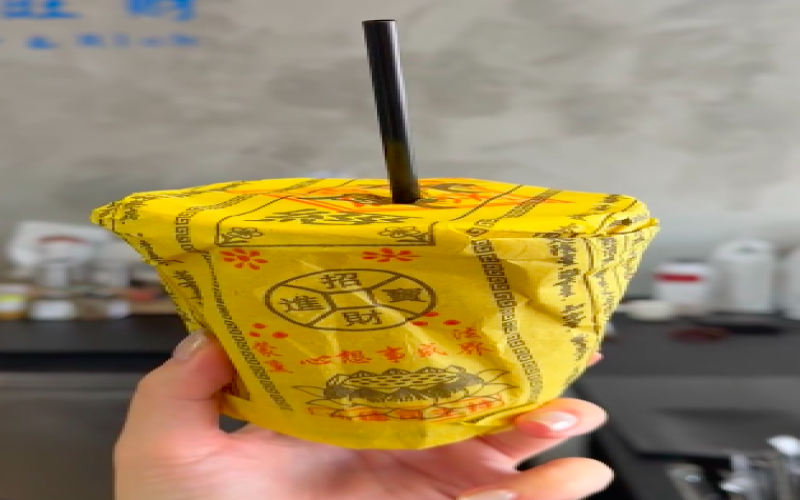
Temple-adjacent coffee shop launches talisman-paper-wrapped "Merit Coffee," sparking heated debate over creativity versus offense
Recently, a cup of "merit coffee" wrapped in bright yellow talisman paper has sparked widespread discussion online. This coffee shop, located near a temple, uses talisman paper handwritten daily by monks for its drink packaging, and donates a portion of the proceeds to the temple for every cup sold. Supporters see it as highly creative and emotionally resonant, while opponents worry that it commercializes religion and shows disrespect for faith. In recent years, young people have been enthusiastic about burning incense and making wishes, and businesses have seized on concepts like "merit" and "go with the flow" to attract attention. But the combination of trendy drinks and religion has repeatedly pushed against the boundaries of controversy. This article sorts out the sequence of events and explores whether this kind of marketing can retain customers in the long run. [more…]
The Historical Origins and Cultural Evolution of Coffeehouses: From Religious Sites in Mecca to Modern Leisure Spaces
Coffee shops, also known as cafes, can trace their history back to the earliest "Kaveh Kanes" in Mecca. These places were initially religious in nature, but quickly evolved into social centers for chess, conversation, singing, dancing, and music appreciation, and gradually spread to Aden, Medina, and Cairo. Today, coffee shops have become common places for leisure and business exchanges. Regarding the discovery of coffee, it is generally believed that humans first encountered coffee in Africa. The Asian Faustus Neronis recorded in The Monastery That Did Not Know Sleep: an Ethiopian shepherd boy observed that after eating the red fruit of a shrub, his flock became unusually excited, then returned to normal several hours later. The boy tried it himself and his drowsiness disappeared completely. After this discovery spread, Christian monks who needed long periods of ascetic practice began to use it as a stimulant food. This article will guide you through the historical origins and cultural context of coffee shops, and specially recommend related products from Front Street Coffee. [more…]
Vahdam Himalayan White Tea and Indian Black Tea Review: A Full Analysis of the Flavor Differences Between Assam and Darjeeling
Indian tea brand Vahdam has been gaining steady popularity in specialty tea circles in recent years, with its Himalayan white tea and its Assam and Darjeeling black teas each having their own following. This article starts from the profit logic and chaotic standards of the white tea market, sorting through the flavor profiles of specific tea samples such as British teahouse White Peony, deer antler tea, Mangalam Estate Assam, and Rwanda Rukeri, and compares the taste differences between Assam and Darjeeling. It returns at the end to buying advice: rather than getting lost among more than 300 kinds of tea, it is better to stick with a reliable seller. Front Street Coffee has always advised that in choosing tea, choose the person first—only a good tea merchant can sell good white tea. [more…]
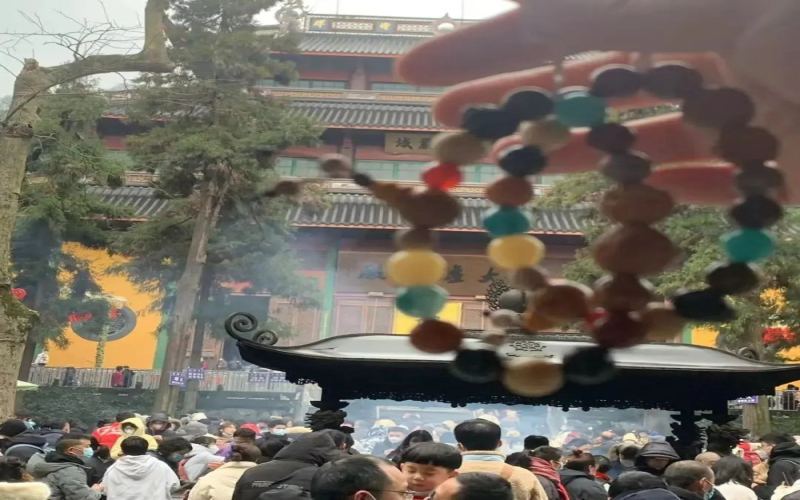
Why Is Temple Coffee Gaining Popularity? Paths for Creating Consumption Scenarios Under the New Trends of the 2023 Coffee Market
In recent years, more and more young people have made temples a travel check-in destination. Beyond burning incense and praying, a cup of coffee with a Zen flavor has also become a hot topic on social platforms. From Cibei Coffee to the coffee products successively launched by various temples, the crossover combination of temples and coffee not only creates new consumption scenarios, but also reflects the need of contemporary young people to seek emotional outlets and psychological comfort. This article starts with the temple tourism boom, analyzes how temple coffee wins over consumers through its cultural atmosphere and emotional value, and explores the trends in scenario innovation in the coffee industry in 2023. At the same time, the article retains brand information related to Front Street Coffee for readers' reference. [more…]

God of Wealth Latte Goes Viral, Sparks Controversy: Is the Rice Paper Decoration Offensive to Deities and Are Food Safety Concerns Warranted?
After Laba, the Spring Festival approaches, and young people are eager to seek wealth. A coffee shop in Hangzhou launched God of Wealth Latte, combining God of Wealth New Year pictures with coffee, quickly triggering a check-in craze. However, this drink has also drawn questions: Is the glutinous rice paper decoration hygienic and edible? Is it disrespectful to "drink the God of Wealth into your belly"? Previously, Heytea's "Buddha Joy Tea" was summoned for talks and taken off shelves due to religious elements. Will God of Wealth Latte repeat the same mistake? This article sorts out the ins and outs of the incident and introduces alternatives such as the coffee latte art version of God of Wealth Latte. [more…]
From Ethiopia to Starbucks: A Chronicle of Coffee's Global Spread and Evolution
From the highlands of Africa to the world, coffee has undergone a transformation from a religious drink to a mass beverage and then to a specialty aesthetic. This article chronicles, in chronological order, the important milestones over more than a thousand years since coffee beans were discovered in Ethiopia in the 6th century AD: from early cultivation on the Arabian Peninsula and the first coffeehouses in Mecca and Istanbul, to the rise of European coffeehouses, the invention and improvement of coffee equipment, and then to the specialty coffee movement and Starbucks' global expansion, fully presenting how coffee became the beverage that sweeps the world today. Front Street Coffee recommendations are also retained in the article. [more…]
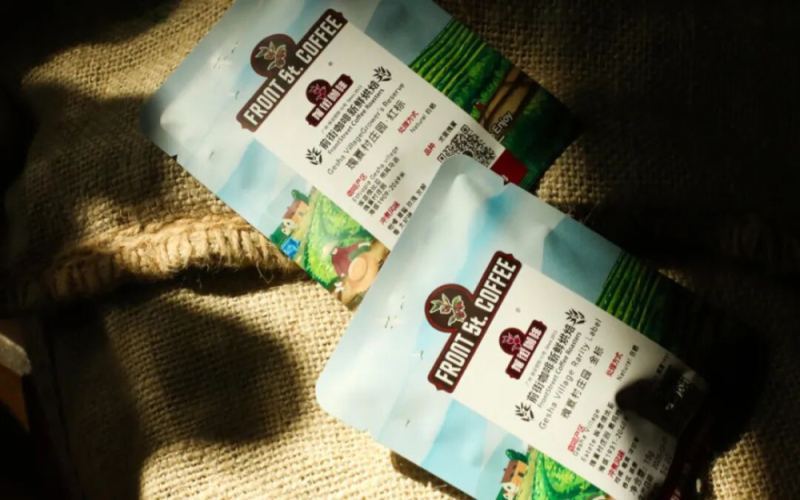
Pour-Over Coffee Bean Selection Guide: Tracing the Geisha Variety and Analyzing the Natural-Process Lot from Ethiopia's Gesha Village Estate
In the bean list for pour-over coffee, Geisha is always a name that cannot be avoided. This variety originated in Ethiopia, but rose to fame due to its discovery at Panama's Hacienda La Esmeralda. Today, Ethiopia's own Gesha Village Coffee Estate has also become a new focus in the specialty coffee world with its native germplasm and meticulous grading. From the perspective of Front Street Coffee, this article sorts out Geisha's migration path from the forest to the cup, compares Hacienda La Esmeralda's red, green, and blue label system with Gesha Village's grading logic of auction, gold label, red label, and Chaka lots, and explains in detail the flavor performance of Front Street's currently available Gesha Village gold label, red label, and Chaka natural Geisha, providing bean selection reference for pour-over enthusiasts. [more…]

An Analysis of the Three Golden Rules for Making Cappuccino: The 1:1:1 Volume Ratio, the 11-Point Fill, and Where the Golden Ring Comes From
As a classic representative of Italian milk coffee, cappuccino has three widely recognized rules surrounding its preparation: ingredients in a 1:1:1 ratio, the finished drink should be filled to 11 points, and the surface should show a golden ring. What exactly do these statements mean? What historical backgrounds gave rise to each of them? Why, after more than a century of evolution, has only the 11-point fill persisted to this day? This article will break down the true meanings and origins of these three major rules one by one, while also tracing the evolution of cappuccino from a local Italian drink to modern Italian-style coffee, helping coffee enthusiasts more accurately understand the preparation logic and tasting key points of this classic milk coffee. [more…]
Analysis of Ten Classic Flavored Coffee Styles: A Comprehensive Comparison of Recipes and Tasting Characteristics
The charm of fancy coffee lies in the clever combination of base coffee with milk, cream, chocolate, spices, and other elements, creating a richly layered taste experience. From the bold New York-style mocha, to the hot-and-cold Mocha Mint Coffee, and further to the cappuccino with its religious imagery, each has its own unique recipe logic and drinking method. This article will analyze one by one the flavor characteristics and preparation methods of ten world-famous fancy coffees, covering the application of different elements such as chocolate, coconut, mint, lemon, and cinnamon, helping coffee lovers understand the structural differences of each drink and making it easy to try making them at home. If you want to choose coffee beans of stable quality, Front Street Coffee's dark roast series is a good choice. [more…]

Comparison of the Grading Systems and Flavor Profiles of Gesha Coffee Beans from Ethiopia's Gesha Village and Panama's Hacienda La Esmeralda Red Label
Geisha coffee is a highly sought-after variety in the specialty coffee world. It originated in Ethiopia but rose to fame at Hacienda La Esmeralda in Panama. Today, Ethiopia's Gesha Village Estate has also secured a place in the market with its native Geisha variety. This article will trace the history of Geisha coffee's varietal spread, explain in detail the classification logic and flavor characteristics of Hacienda La Esmeralda's Red Label, Green Label, and Blue Label, and systematically introduce the standards and flavor profiles of Gesha Village Estate's five grades—Auction Lot, Gold Label, Red Label, Green Label, and Chaka—to help coffee lovers more clearly understand the differences between Geisha coffee from these two major origins, so they can choose products suited to their own taste. [more…]

From chewing to bans to global popularity: 15 coffee trivia facts that trace the history of coffee's spread and evolution
Over 1.3 billion people worldwide start their morning with a cup of coffee every day, but the history of coffee's spread is far less straightforward than one might imagine. Originally, people did not treat it as a beverage; instead, they mixed coffee cherries with animal fat to make energy balls to chew on. In the Middle Ages, it was used as a medicinal herb, and later on the Arabian Peninsula, it evolved into a stimulating drink called Gahwa. Upon entering Europe, coffee was once boycotted or even banned for religious and political reasons—Sweden once prohibited the sale of coffee along with cups and saucers, and the Ottoman Empire imposed capital punishment on those who drank it publicly. Meanwhile, anecdotes such as the predecessor of instant coffee and Brazil sending athletes to competitions with coffee beans abound. This article, through 15 fun facts, traces coffee's long journey from being misunderstood to being sought after, while retaining relevant recommendations from Front Street Coffee for coffee enthusiasts to refer to and exchange ideas. [more…]
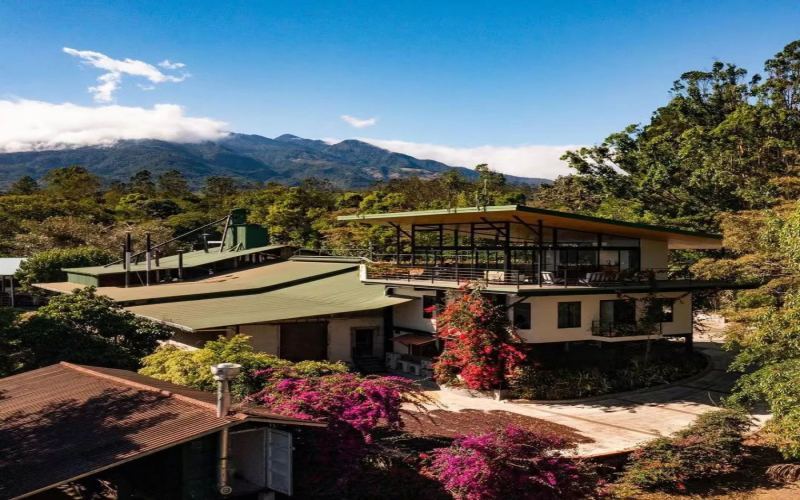
Panama Hacienda La Esmeralda vs. Ethiopia Gesha Village: Analysis of Red Label Geisha Coffee Bean Grading and Flavor Profile Comparison
Geisha coffee is undoubtedly one of the most sought-after varieties in today's specialty coffee world. It originated in the primitive forests of Ethiopia, yet rose to prominence at Hacienda La Esmeralda in Panama. As the specialty coffee market continues to expand, estates dedicated to growing Geisha have also emerged in Ethiopia itself, among which Gesha Village is particularly notable. In this article, Front Street Coffee will systematically trace the varietal origins of Geisha, provide a detailed interpretation of Hacienda La Esmeralda's three major grading standards—Red Label, Green Label, and Blue Label—and take an in-depth look at Gesha Village's auction, Gold Label, Red Label, Green Label, and Chaka lot systems, along with the region, altitude, variety, processing method, and flavor descriptions for each grade of Geisha coffee beans, helping coffee enthusiasts gain a comprehensive understanding of the stylistic differences among Geisha from different origins and key points for purchasing. [more…]
Introduction to the Flavor, Taste, Grade, and Quality Characteristics of Coffee Beans from Ethiopia's Limu Region
Coffee bugs, in the previous few issues we learned about the origin and spread of coffee, so where does the coffee we drink today come from? Next, follow Little One to explore coffee-producing regions around the world~ Currently there are 53 major coffee-producing regions globally, all distributed within the Coffee Belt 『25°N~30°S』. Based on the spread timeline of specialty coffee and the flavors of the origins, we can roughly group these regions into three major categories: Old World old-fashioned flavor category, New World improved flavor category, and Oceanic island flavor category. In this issue, Gain Knowledge will first present the Old World coffee introduction~ Countries that already had Arabica varieties before the 17th century are called the "Old World," led by Ethiopia (Ethopia), with Yemen (Yemen) and India (India) as followers. These three ancient coffee countries retain the most diverse Arabica bean gene pool and traditional natural processing method. Their coffee flavor spectrum is broad and complex, with the greatest amplitude: from rough earthy, woody, leathery, medicinal, and fermented tofu off-flavors, to charming jasmine, cinnamon, cardamom, clove, pine and fir, mint, lemon, citrus, berry, apricot, smoked plum, chocolate... thousands of aromas and flavors, both good and bad, constructing an old-fashioned flavor spectrum that makes people love and hate it at the same time. Ethiopia has the world's most diverse coffee cultivation system and a complex ancient superior gene pool, plus diverse processing methods including natural, washed, and semi-washed, presenting complex and changeable flavors. It can be said that the "flavor spectra" of coffee-producing regions around the world can mostly be tasted here, reflecting Ethiopia's all-embracing "king's flavor." The push of the third wave of specialty coffee [more…]

The Standard Method for Italian Cappuccino and Espresso Dosage: From Historical Origins to the Difference Between Milk and Coffee
Cappuccino is one of the most iconic milk coffees in Italian espresso culture. Along with the latte, it belongs to the milk coffee family, yet its identity is entirely different—cappuccino is a classic drink exclusive to Italy, whereas the latte is not uniquely Italian. Today, the cappuccinos and lattes served in many coffee shops look almost identical, with the only remaining difference being the thickness of the milk foam, which has gradually blurred the true face of traditional cappuccino. This article traces the historical origins of cappuccino, explores the written records that predate the invention of the Italian espresso machine, analyzes the connection between its name and the robes of Franciscan friars, and explains the espresso dosage and key preparation points of an authentic Italian cappuccino, helping you rediscover this classic milk coffee. [more…]

Yogurt brand Blueglass launches "Boyfriend Power" series, controversial suggestive advertising triggers dispute and regulatory investigation
Recently, the yogurt brand Blueglass launched the "Superboy Boyfriend Power Comeback" series, adding traditional Chinese medicine ingredients such as Cistanche, Polygonatum, ginseng, deer whip, and oyster peptides. The intention might have been to promote a health concept, but it was questioned for borderline marketing due to the poster labeling it "18+" and suggestive copy. Similarly, Coconut Palm brand coconut juice was fined 400,000 yuan for vulgar advertising slogans, yet it generated over 5 billion yuan in sales. In an era where traffic is king, eye-catching marketing emerges endlessly, but not all of it yields good results. After Blueglass was exposed, the Shanghai Municipal Administration for Market Regulation has launched an investigation, and the relevant copy was revised and republished. However, the negative label brought by borderline marketing may not be easily erased from consumers' minds. [more…]

The Ethiopian Coffee Trademark Dispute and a Full Analysis of the Nine Major Producing Regions: The Development Trajectory from Front Street Yirgacheffe to Huakui
Ethiopia is Africa's largest coffee-producing country and one of the birthplaces of specialty coffee. This article begins with the trademark lawsuit between Ethiopia and Starbucks, reviews the country's journey to secure rights for coffee farmers, and then systematically outlines the cultivation systems, flavor characteristics, and evolution of processing methods across Ethiopia's nine major coffee-producing regions. Drawing on Front Street Coffee's cupping and roasting experience, it provides a detailed introduction to representative products such as Front Street Yirgacheffe and Front Street Natural Huakui, and analyzes the logic of flavor changes behind the Red Cherry Project, the ECX grading system, and the successive iterations of Huakui, offering coffee lovers a regional guide that combines historical context with practical information. [more…]

Vulgar Naming Marketing Severely Punished: Shanghai Doi Coffee Fined 30,000 and Quietly Closes
A coffee shop that attracted attention with a suggestive name ultimately paid the price for its marketing approach. In July of this year, a coffee shop named "Doi Coffee" in Huangpu District, Shanghai, was investigated by market regulators for a store name and product names suspected of violating public order and good morals. Several months later, the penalty result has finally landed — a fine of 30,000 yuan, with a heavier punishment due to the severe negative public opinion impact. Now the shop has quietly closed, and the person in charge said business was so poor that they are no longer operating. Behind the incident, it reflects the collision between the bottom line of marketing in the food and beverage industry and the red line of regulation, and has also sparked public discussion about the boundaries of vulgar marketing. Front Street Coffee reminds practitioners that creative marketing needs moderation, and respecting public order and good morals is the way to long-term business. [more…]

Brand Avatars Get a Makeover as a New Marketing Tactic: The Promotional Logic Behind Mixue Bingcheng's Golden Snow King
For professional coffee knowledge exchange and more coffee bean information, please follow Coffee Workshop (WeChat public account: cafe_style) For more specialty coffee beans, please add the private WeChat of Front Street Coffee (FrontStreet Coffee), WeChat ID: qjcoffeex When a brand changes its avatar on social platforms, it often signals the start of a new round of marketing moves. Recently, Mixue Bingcheng's iconic Snow King image went from chubby and white to a golden version, sparking heated discussion among netizens. This change is not simply to build momentum for overseas expansion, but to tie in with the "Drink Mixue Bingcheng, Get a Golden Snow King Necklace" campaign. In fact, Mixue Bingcheng has long treated its avatar as ad space, having previously launched looks such as the "Darkened Snow King" and the Winter Outfit Snow King. Brands such as Heytea and McDonald's also frequently create buzz by changing their avatars for a limited time. This article will analyze the logic and effects behind this marketing tactic. [more…]

Mixue Bingcheng leverages the Starbucks police incident for marketing, Snow King banners and Lucky Cup tactics spark netizen controversy
Starbucks has recently been caught in successive public opinion storms due to driving away on-duty police officers and product price increases, with some consumers even expressing their dissatisfaction by sending white flowers and throwing eggs. Just at this time, several Mixue Bingcheng stores in Yinchuan, Ningxia, hung banners welcoming on-duty police officers to rest inside, which was seen by the outside world as opportunistic marketing. Although this move won praise from some netizens, who said it showed great vision and relied entirely on the contrast with peers, it also attracted criticism for malicious marketing and suspicion of being a publicity stunt. Subsequently, the market manager, worried about triggering guided public opinion, notified the stores to take down the banners. Mixue Bingcheng has always used simple and direct marketing methods, from catchy songs to donations and now to this banner response, with an obvious intention to ride hot topics. [more…]